Your Streaming App Already Knows You're in a Mood — Before You Do

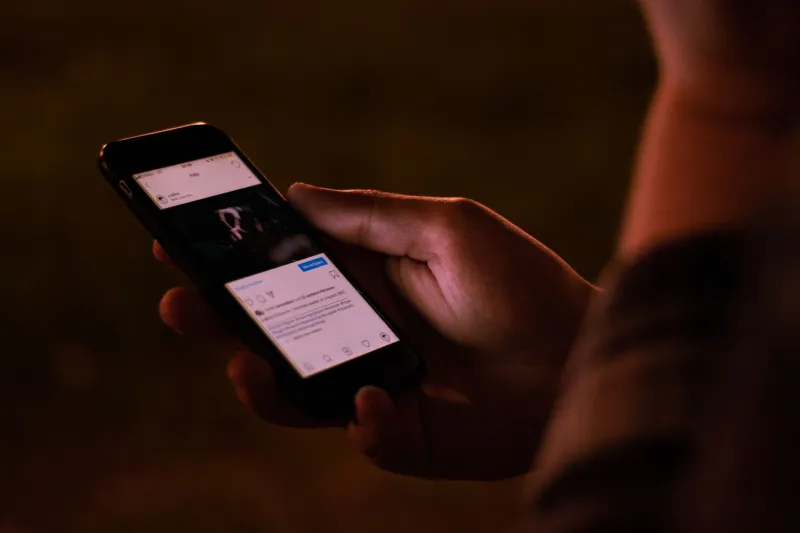
Photo by Photo by Jakub Żerdzicki on Unsplash on Unsplash
You open Netflix on a Tuesday night after a brutal workday. You scroll past three prestige dramas, hover over a true crime doc for four seconds, and ultimately land on a comfort rewatch of The Office for the eleventh time. You think you made that choice. But did you?
Behind that moment of apparent free will is a system that processed dozens of micro-signals about your behavior — your scroll speed, the time of day, how long you paused on each thumbnail, your recent watch history — and quietly nudged you toward exactly what it predicted you needed. Not just what you'd like, but what your emotional state was probably calling for.
This is the new frontier of entertainment technology, and it's way more intimate than most of us realize.
More Than Just "People Also Watched"
The recommendation engine as we knew it in the early streaming days was relatively blunt. Watch a rom-com, get served more rom-coms. It was essentially a very fast librarian who only knew one thing about you.
Today's systems are a different animal entirely. Platforms like Netflix, Spotify, TikTok, and YouTube are building what researchers sometimes call affective computing models — systems designed to infer emotional context from behavioral data.
"We're not just looking at content preferences," explained one data scientist who works in the streaming space and asked to remain anonymous due to NDA restrictions. "We're building probabilistic models around engagement patterns that correlate with emotional states. High skip rates combined with late-night sessions tell a very different story than a Sunday afternoon binge with low pause frequency."
In plain English: the platform is making educated guesses about your mood based on how you're consuming content, not just what you're consuming.
The Signals You Don't Know You're Sending
So what exactly are these platforms tracking? More than you'd expect.
Watch time is the obvious one — how long you stay on something before bailing. But the more revealing data points are subtler. Pause behavior (do you pause to check your phone, or to sit with a moment?). Rewind frequency. Whether you skip intros. How fast you scroll through a recommendation grid before settling. Even the time elapsed between opening the app and actually pressing play.
All of these behaviors, aggregated across millions of users, create what you might call an emotional fingerprint for different types of viewing sessions. A person who opens Spotify and immediately skips the first four songs is probably restless or anxious. Someone who lets an album play straight through without interruption is likely in a settled, focused headspace.
"There's a whole field of psychology around what we call 'mood-congruent media selection,'" said Dr. Pamela Holt, a media psychology researcher. "People naturally gravitate toward content that matches or helps regulate their emotional state. What's new is that platforms are now automating that process — and doing it faster than our own conscious awareness can."
The Uncanny Valley of Personalization
Here's where it starts to feel a little strange. Many users report moments of genuine unease when a recommendation lands too perfectly. You're stressed about money, and suddenly your "For You" page is full of minimalist living content and financial wellness videos. You just went through a breakup, and every playlist Spotify generates sounds like it was curated by someone who read your diary.
This phenomenon has a name in tech circles: the personalization uncanny valley. It's the point at which an algorithm's accuracy stops feeling helpful and starts feeling like surveillance.
"There's a real psychological tension here," Dr. Holt noted. "On one hand, people love feeling understood. On the other hand, being understood by a machine — without ever explicitly sharing how you feel — can trigger a sense of lost privacy or lost agency. Both reactions make total sense."
For what it's worth, most platforms insist they are not accessing device microphones or cross-referencing personal communications. The emotional inference is derived entirely from behavioral data within the app. But that caveat does little to soften the effect when the algorithm nails your Tuesday night vibe with eerie precision.
What This Means for Your Autonomy as a Viewer
The deeper question isn't really about privacy — it's about choice. If a platform can predict and pre-sort your entertainment options based on your emotional state, are you still really choosing? Or are you just confirming a recommendation made on your behalf?
This is something media scholars have started calling algorithmic determinism — the idea that hyper-personalized systems gradually narrow your exposure to content, funneling you into increasingly predictable patterns that feel like free choice but are actually just the algorithm feeding you what it already knows you'll accept.
TikTok's For You page is the clearest example of this at scale. The platform is famously opaque about exactly how its recommendation engine works, but researchers have documented how quickly the algorithm locks onto emotional and psychological patterns — sometimes within a single session — and begins delivering an increasingly tailored stream of content. Users report feeling like the app "gets" them within hours of first use. That's not magic. That's a very fast, very sophisticated feedback loop.
"The risk isn't that the algorithm is wrong," said the data scientist. "The risk is that it's right so often that you stop exploring. Discovery requires a little friction. If everything is perfectly matched to your current mood, you never stumble onto something that challenges you or surprises you."
Is There a Way Out?
Maybe the answer isn't to resist the algorithm entirely — that ship has mostly sailed — but to stay a little self-aware about the dynamic.
Some practical moves: deliberately browsing outside your usual categories once a week. Searching for something specific instead of defaulting to the home screen. Clearing your watch history periodically to reset the system's assumptions about you. Even just noticing when you're being served the same emotional lane over and over again can be enough to break the loop.
Spotify actually built a feature for this — the "Made for You" hub sits alongside genre and mood browsing specifically so users can choose between algorithmic curation and their own active discovery. It's a small gesture, but it acknowledges the tension.
The platforms that will earn long-term loyalty aren't necessarily the ones with the most accurate mood-detection — they're the ones that figure out how to use that accuracy to expand what you experience, rather than just confirm what you already are.
The Takeaway
Your favorite apps knowing your emotional state isn't science fiction anymore. It's Tuesday night. And while there's something genuinely impressive about the technology behind it, there's also something worth protecting: the messy, inefficient, wonderfully human experience of not quite knowing what you're in the mood for — and finding something unexpected anyway.
Sometimes the best thing an algorithm can do is get it slightly wrong.