Smell, Sound, Color, Repeat: The Secret Science Behind Brands That Get Under Your Skin
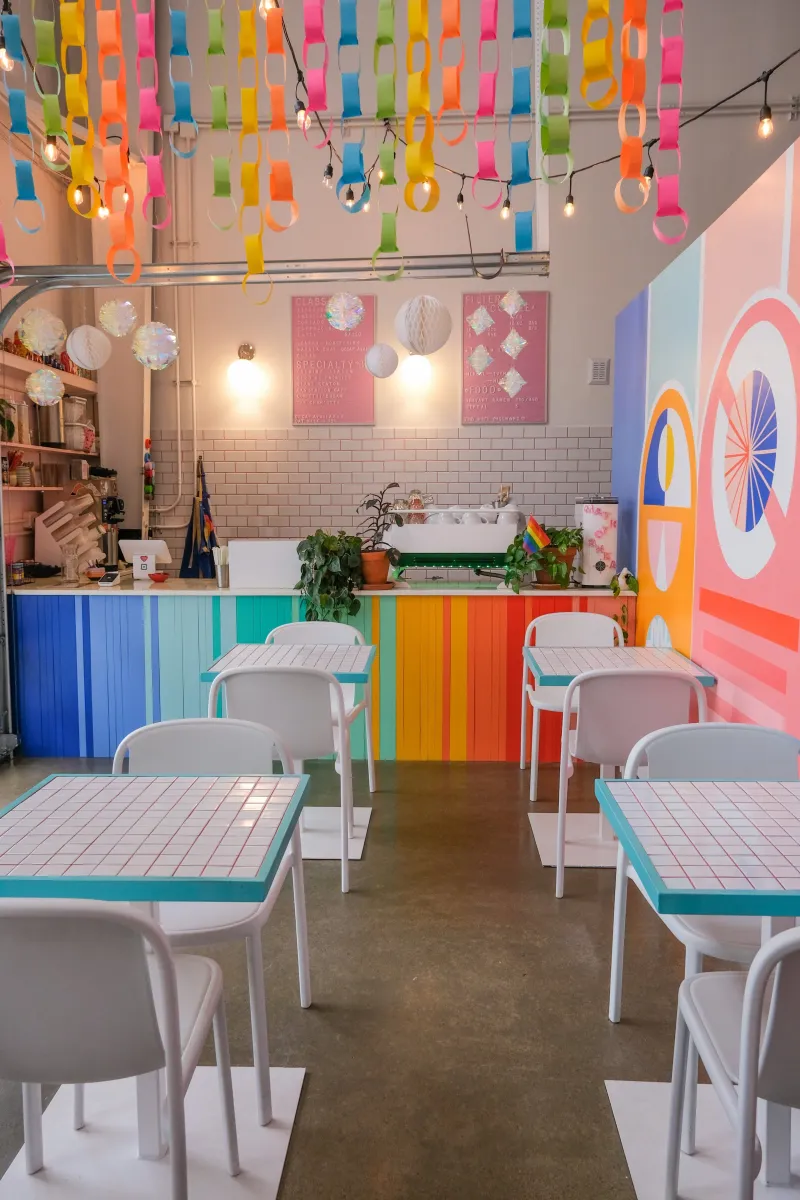
Photo: colorful sensory brand experience coffee shop retail ambiance, via i.pinimg.com
You're running late on a Tuesday, you've spilled coffee on your shirt, and your inbox looks like a crime scene. But the moment you push open that green door and catch the first wave of roasted beans and warm milk, something shifts. Your shoulders drop. You exhale. You're at Starbucks, and somehow — almost magically — everything feels a little more manageable.
That feeling isn't an accident. Not even close.
Brands have quietly been building what researchers call "multisensory experiences" for decades, layering colors, sounds, scents, and textures in ways that bypass your rational brain entirely and go straight for the emotional jugular. It's a practice sometimes described through the lens of synesthesia — that neurological phenomenon where senses blur together, where a sound might feel blue or a smell might taste like a memory. Brands aren't just borrowing the concept. They're weaponizing it.
Why Your Brain Is Embarrassingly Easy to Manipulate
Here's the slightly humbling truth: your brain is wired for shortcuts. Processing every sensory detail of your environment consciously would be exhausting, so your mind bundles familiar signals into emotional packages. See a particular shade of red? Your pulse might tick up slightly. Hear a specific chord? Nostalgia floods in before you've even registered the song.
Brands figured this out and ran with it. The field is sometimes called "sensory branding," and it operates on a simple premise — the more senses a brand engages simultaneously, the deeper the emotional imprint. It's not manipulation in some sinister sci-fi sense. It's just really, really effective psychology.
Martin Lindstrom, one of the more prominent voices in brand strategy, famously argued that logos are becoming less important than what he calls "smash-your-brand" tests — if you stripped away the name and logo, could a customer still identify the brand through its remaining sensory signatures? For a handful of elite companies, the answer is absolutely yes.
The Color Layer: More Than Just Pretty Packaging
Let's start with what's most obvious — color. Starbucks' particular shade of green (Pantone 3425, if you want to get nerdy about it) wasn't chosen because someone liked it. It was chosen because greens in that family signal calm, nature, and community. It's welcoming without being aggressive. It says stay a while without saying a single word.
Tiffany's robin's egg blue is so culturally embedded that the company successfully trademarked it. Target's red triggers urgency and excitement, nudging you toward impulse buys. McDonald's yellow is literally one of the most psychologically stimulating colors in the spectrum — it triggers hunger and happiness simultaneously, which is either genius or deeply unsettling depending on your mood.
Color psychology isn't a new concept, but the precision with which brands now deploy it is genuinely impressive. Every campaign, every store refresh, every app redesign goes through rounds of testing to make sure the hues are doing exactly the emotional work they're supposed to.
The Sound Layer: Logos Your Ears Remember
That Netflix sound — the two-note "ta-dum" that plays when you fire up the app — lasts less than three seconds. It was designed by Hans Zimmer collaborator Lon Bender, and it's one of the most recognized audio logos on the planet. It signals something specific: you're about to be entertained. Relax. The good stuff is coming.
Intel's five-note chime has been playing since 1994 and is still one of the most recalled audio logos in consumer research. MGM's lion roar. The NBC chimes. These aren't just cute flourishes — they're emotional anchors that create Pavlovian associations over years of repetition.
Retail spaces are equally deliberate. Studies have shown that slower-tempo music in grocery stores increases the time shoppers spend in the store — and the amount they spend. Luxury boutiques play classical or ambient music to signal exclusivity. Fast food chains pump up the tempo to encourage faster table turnover. The playlist you're hearing at your favorite store? It was curated by someone whose entire job is making you feel a specific way.
The Scent Layer: The Most Underrated Brand Weapon
If you've ever walked through a Hollister or an Abercrombie & Fitch and been hit by that wall of cologne, you've experienced aggressive scent branding at its most extreme. But subtler versions are everywhere.
Luxury hotels pump proprietary scents through their HVAC systems. Marriott and Westin both have signature scents that loyal guests recognize instantly — and some even purchase the candles or diffusers to recreate that feeling at home. That's the goal: make the scent so tied to the emotional experience that customers literally want to bottle it.
Singapore Airlines reportedly trains flight attendants to apply a specific floral scent called Stefan Floridian Waters before boarding. The same scent is used in their hot towels and cabin diffusers. The goal is consistency — every touchpoint smells like safety, comfort, and care.
Even grocery stores get in on this. Fresh bread and coffee aromas near store entrances aren't always coming from actual bakeries — sometimes they're pumped in deliberately, because those scents trigger comfort and hunger, which translates directly to longer visits and fuller carts.
The Texture Layer: What You Touch Tells You How to Feel
Open a MacBook box. Go ahead, really think about the last time you did it. The resistance of the lid. The smooth, cool aluminum. The way the packaging slides apart with just enough friction to feel deliberate. Apple has said publicly that the unboxing experience is engineered to create a sense of anticipation and premium quality before you've even seen the product.
This is texture as emotional communication. Matte finishes feel sophisticated. Rough textures feel artisanal and handcrafted. Heavy packaging feels expensive. Brands obsess over these details because they know that the hands communicate directly to the emotional brain, often before the eyes have finished processing.
Why It All Works Together
The real magic — and the reason this whole enterprise is so effective — is in the layering. Any single sensory cue can be pleasant or unpleasant. But when a brand gets multiple senses working in harmony, something more powerful happens: you stop noticing the individual elements and start just feeling the brand.
That Starbucks experience isn't the green alone, or the coffee smell, or the ambient acoustic playlist, or the weight of the ceramic mug. It's all of it, simultaneously, creating something that your brain catalogs as an emotional memory rather than a transaction.
And emotional memories are sticky. They're what turns a customer into a loyalist, a loyalist into an evangelist, and an evangelist into someone who genuinely gets annoyed when a brand changes its packaging.
Next time you walk into your favorite store, open your favorite app, or unwrap something that just feels right — pause for a second. Someone worked very hard to make you feel exactly that way. And honestly? Knowing that doesn't make it any less effective.