Forty People, One Basement, Zero Regrets: The Small-Room Concert Takeover
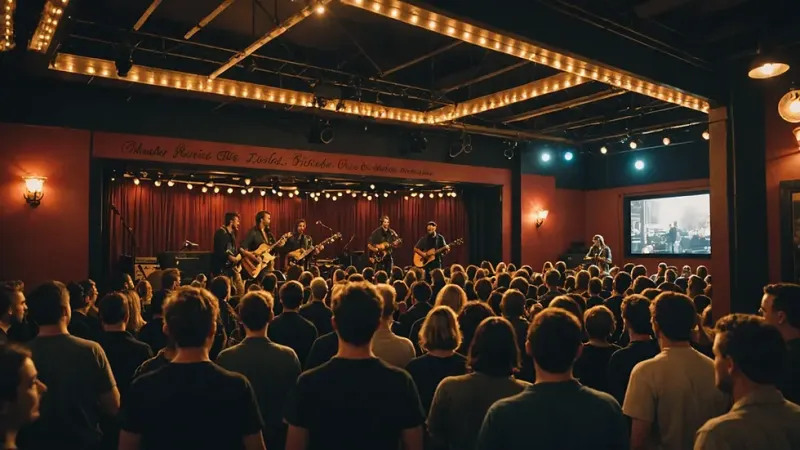
Photo: intimate small concert crowd basement live music close to performer, via static.wixstatic.com
There's a moment at every tiny show that arena architects can't replicate: when the singer's mic cuts out, and the whole room just... picks up the verse. No teleprompter, no backing track, no $300 seat with a partial view of the jumbotron. Just forty strangers harmonizing in a living room that smells faintly of spilled seltzer.
Welcome to America's small-venue renaissance — where the rent money is questionable, the sightlines are perfect, and the memory is guaranteed.
The Math Nobody Talks About
Let's be honest about what's driving this. An arena show for a mid-tier act now runs $150-plus after fees, parking, and the obligatory $9 beer. Meanwhile, the same artist — or one two years from filling those arenas — is playing a 50-cap listening room in Nashville or a garage in East Austin for $15.
The economics on the artist's side are just as lopsided. Touring a van instead of three tour buses means a band can actually make money on a 15-date run instead of going deeper into debt for exposure. Booking agents have noticed: the DIY circuit has become a genuine farm system, with A&R reps squeezing into house shows in Portland, Philadelphia, and Minneapolis like it's a college recruiting trip.
Proximity Is the New Production
Here's the cultural shift: production value used to be the flex. Pyro, LED walls, flying drum kits. Now? The flex is that the artist learned your name.
Gen Z and younger millennials came of age through screens — they've seen a million flawless performances at 4K resolution. What a screen can't give you is sweat, eye contact, or the artist's guitar pedal breaking mid-song while everyone laughs. Intimacy is the one luxury item that can't be livestreamed.
Social media has supercharged it, too. A rooftop set with the skyline behind it doesn't just feel magical — it performs well. The tiny venue is both a night out and a content engine, and artists know it. Many now deliberately schedule secret, unannounced small shows between arena dates, partly for the fans and partly because a grainy clip of a 30-person living room show does more for a career than any billboard.
Inside the Micro-Venue Economy
The infrastructure quietly professionalized. Platforms now exist to connect artists with house-concert hosts, renters list their living rooms as one-night venues, and old storefronts are converting into sub-100-cap rooms because that's what the market demands. Even legacy venues are getting in on it — running 'up close' series in their back rooms at reduced capacity and premium intimacy.
The host economy is real, too. A good house-show host in a music city can have touring acts asking them for dates. Some offset rent with suggested donations; others just like being the person who says 'you had to be there' — and being right.
Growing Pains in a Small Room
It's not all fairy lights and acoustic sets. Fire codes, noise complaints, and landlord surprises are the constant background hum of the movement. Cities from Oakland to Chicago have wrestled with how to regulate shows happening in spaces that were never meant to be venues. The smart operators are legitimizing — small licenses, capped occupancy, actual exits clearly marked.
And there's a tension at the heart of it: the moment a basement scene gets popular, it risks losing the very thing that made it special. Discoverability is the whole point, but 'the whole point' gets a lot less magical when there's a line down the block.
Why This Isn't a Phase
Live entertainment isn't shrinking — it's bifurcating. The mega-tour keeps selling to the casual fan who wants the spectacle and the singalong. But the emotional premium is migrating to the small room, where $20 buys you a story you'll tell for a decade.
The 20-somethings spending rent money on elevator concerts aren't being reckless. They're making a calculated bet that a night three feet from a future headliner is the best entertainment ROI in America. Honestly? They're probably right.
So next time a friend texts you about a show in somebody's backyard with a band you've never heard of — go. Bring cash. Learn the words. You're not early to a trend; you're early to a favorite artist.