Show Me What You're Actually Watching: The Double Life of American Entertainment
Somewhere between the carefully lit screenshot of that critically acclaimed HBO drama you posted to your Instagram story and the third consecutive episode of a mid-2000s competitive cooking show you watched at midnight, there's a gap. A wide, comfortable, slightly embarrassing gap. And you're not alone in living inside it.
Americans have quietly developed two distinct entertainment identities. There's the public one — the tasteful, conversation-ready roster of prestige TV, indie films, and buzzy new releases that you mention at dinner parties and casually drop into group chats. And then there's the private one — the actual stuff. The reality competition reruns. The YouTube rabbit holes. The movie you've seen fourteen times and would rather not explain.
Welcome to the era of the split screen life.
The Curated Self vs. The Couch Self
Social media has done something fascinating to our relationship with entertainment. It's turned our taste into a kind of personal branding exercise. What you watch isn't just what you watch anymore — it's a signal. A declaration of who you are, what you value, how smart and interesting and culturally aware you want to appear.
"There's genuine social currency attached to being seen consuming the right things," says Dr. Priya Mehta, a behavioral psychologist based in Chicago who studies digital identity. "When someone posts about a prestige documentary or an indie film that just screened at Sundance, they're not just sharing what they enjoyed. They're participating in a kind of identity performance."
That performance comes with real pressure. The result? A lot of people are quietly keeping their actual watch habits tucked away like a second wallet.
In informal conversations with viewers across the country, the pattern shows up again and again. A 28-year-old graphic designer in Austin admits she'll mention The Bear or whatever new limited series everyone's talking about at work, but her real evenings are spent deep in old Real Housewives franchises. A 34-year-old high school teacher in Ohio has a whole separate streaming profile — literally a different user account — so his recommendations don't "get contaminated" by the action comedies he actually wants to watch after a long day.
"I know it sounds ridiculous," he laughs. "But I don't want the algorithm judging me."
Why We Split in the First Place
The psychology here is layered. Part of it is straightforward social anxiety — the fear of being seen as lowbrow or unsophisticated. But there's something more interesting happening underneath that.
Entertainment has always served different purposes at different times. Sometimes we watch to be challenged, to learn, to feel something new. And sometimes we watch because the brain is exhausted and it just wants something warm and familiar and completely undemanding. These are both legitimate needs. The problem is that only one of them photographs well.
"There's nothing wrong with escapist content," Dr. Mehta points out. "Comfort viewing, repetitive formats, low-stakes competition shows — these serve real psychological functions. They regulate stress, they create routine, they offer a kind of predictability that's genuinely soothing. But they don't carry prestige, so people hide them."
Creators are noticing the split too. Jordan Reyes, who runs a mid-size entertainment podcast out of Los Angeles, says his listener data tells a story his comment section never would. "People DM me privately to admit what they're actually into," he says. "But on social? Everyone's watching the same five serious shows. There's a whole secret majority out there watching stuff they'd never post about."
The Guilty Pleasure Is a Lie
Here's where it gets interesting: the phrase "guilty pleasure" might be doing more harm than good.
Calling something a guilty pleasure implies there's something wrong with enjoying it — that you should feel bad about it, that it's beneath you. But that framing was always a little ridiculous. Enjoying something isn't a moral failing. It's just enjoying something.
The real question isn't why people watch "low-brow" content. It's why we've created a culture where admitting to it feels like a confession.
Part of the answer lies in how entertainment criticism evolved over the past two decades. The rise of the "prestige TV" era — The Sopranos, The Wire, Breaking Bad — gave serious television a level of cultural legitimacy it had never had before. That was genuinely exciting. But it also created a new hierarchy, a new way to sort people by taste, a new set of gatekeepers determining what counted as "worth watching."
Streaming exploded that hierarchy in one direction while Instagram reinforced it in another. Now there's more content than ever, but also more ways to be judged for what you choose.
The Feed Doesn't Know What You Need
There's something almost poignant about the whole situation. People are performing sophisticated taste for an audience while quietly giving themselves permission to just rest in private. The public entertainment life is aspirational. The private one is human.
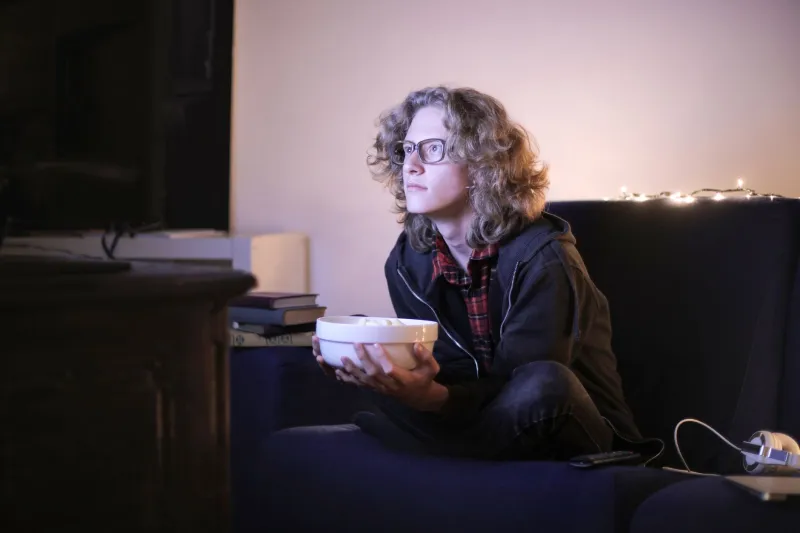
And the private one is often where the real emotional connections happen. The show you've rewatched four times because it makes you feel safe. The dumb comedy you put on when you're sick. The reality show you and your mom text about every week. None of that is going on your story. All of it is shaping you.
"The stuff we consume privately is often more emotionally honest than what we'd admit to publicly," says Reyes. "It's what we actually need, not what we think we should need."
Some people are starting to push back against the performance. There's a small but growing movement — call it entertainment honesty — where people deliberately post about their "lowbrow" favorites, almost as an act of cultural defiance. TikTok has helped, with its more chaotic, less curated energy making space for unfiltered recommendations that don't come with a prestige label attached.
Closing the Gap
Maybe the healthiest version of this isn't forcing everyone to post their real watch history or pretending prestige content is overrated. It's just loosening the grip a little. Letting the two lists exist without one of them being a source of shame.
Watch the acclaimed documentary. Also watch the cooking competition from 2009 that you've seen six times. Neither one defines you. Both of them, together, kind of do.
Your taste doesn't have to be a brand. It can just be yours — loud and varied and full of contradictions, like most good things in life.
The feed will never see the whole picture. But that might be exactly the point.