No Apologies, No Shame: America Is Finally Owning Its Trashy TV Obsessions
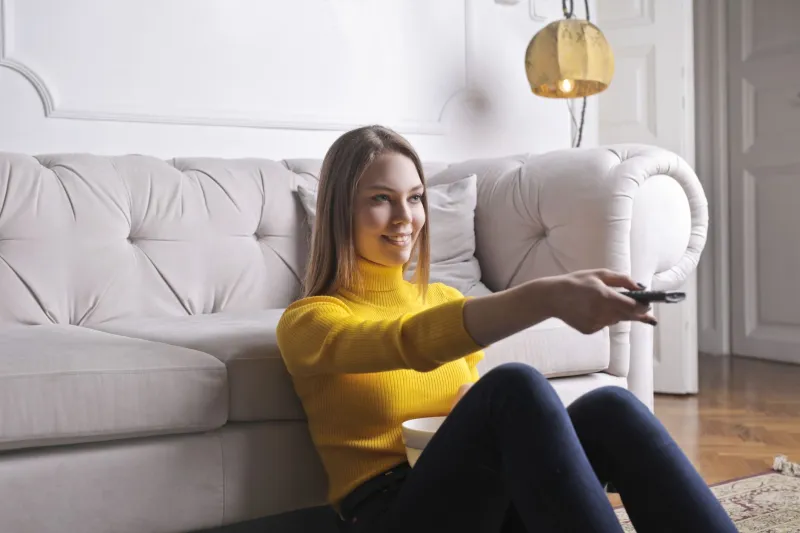
There was a time — not even that long ago — when admitting you spent your Friday night watching a Real Housewives marathon felt roughly equivalent to confessing you'd eaten cereal for dinner three nights in a row. Technically fine, but not something you'd lead with at brunch. You'd nod along when someone mentioned The Crown or Succession, maybe throw out a reference you half-remembered from a recap, and quietly go home to your actual favorite show: the one where two strangers get engaged after knowing each other for eleven days in a beach house.
That performance is getting old. And more and more Americans are just... done with it.
The Pretension Tax Nobody Wanted to Pay
Entertainment snobbery has always been a thing. There's a long history of drawing hard lines between what's considered "worthy" viewing and what gets dismissed as lowbrow noise. Film critics built careers on it. Dinner party conversations ran on it. The unspoken social contract was clear: if you wanted to be taken seriously as a person of taste, you watched the slow-burn Scandinavian thriller, not the one where someone dramatically flips a table.
But that contract was exhausting, and honestly, kind of a lie. The same person who would cite The Godfather as their favorite film was also, quietly, deeply invested in whether a contestant on The Bachelor was "there for the right reasons." The gap between what people said they watched and what they actually watched has always been enormous. The difference now is that gap is closing — not because people are suddenly watching less reality TV, but because they've stopped pretending they aren't watching it.
Psychologists have a term for the discomfort that comes from hiding genuine preferences to fit a social image: it's a form of self-monitoring, and it costs real mental energy. When the performance doesn't match the reality, there's a low-grade friction that builds up over time. At some point, the relief of just being honest outweighs the social risk of being judged.
Social Media Made It Safe — Then Made It a Flex
Here's the thing about guilty pleasures: guilt is a group project. It only works if enough people agree something is embarrassing. And social media, for all its chaos, has been remarkably effective at dissolving that consensus.
When Love Is Blind dropped on Netflix in early 2020 and the world went into lockdown, something cracked open. Suddenly everyone — your coworker, your aunt, that guy from your college who only posted about jazz — was live-tweeting their reactions to the same absurd, beautiful mess of a show. There was nowhere to hide, and more importantly, nobody wanted to hide. The communal experience of watching something unabashedly ridiculous together, in real time, turned out to be one of the most connective things the internet had offered in years.
Fast forward to now, and the celebration of so-called "trash" entertainment has gone from acceptable to actively cool in certain corners of the internet. TikTok accounts dedicated to deep-dive analyses of 90 Day Fiancé relationships get millions of views. Reddit threads breaking down the internal logic of straight-to-streaming horror sequels read like film school dissertations. People aren't just watching this stuff — they're studying it, building communities around it, and doing so completely without irony.
The shift isn't just tolerance. It's enthusiasm.
What "Guilty" Even Means Anymore
It's worth asking whether the "guilty pleasure" framing still holds up. The guilt part was always borrowed — it came from someone else's opinion of what you should be enjoying. Strip that away, and you're just left with pleasure, which seems like a pretty reasonable thing to pursue from your couch on a Tuesday.
Cultural critics have been making this argument for a while. The idea that complexity or prestige is the only valid measure of entertainment quality has been losing ground steadily. Reality TV, for instance, requires a genuinely sophisticated kind of viewer engagement — reading social dynamics, tracking narrative arcs across seasons, parsing what's produced versus what's spontaneous. Low-budget horror, at its best, operates as pure genre craft, delivering exactly what it promises without pretending to be anything else. There's an honesty to that.
None of this means everything is equally good or that criticism doesn't matter. It means the framework for deciding what's worth your time has gotten more personal and less performative. People are asking "does this entertain me?" more than "will admitting I watch this make me look smart?"
The Community That Killed the Shame
If social media broke down the wall of embarrassment, fan communities finished the job. The people who've been loudest about loving "uncool" entertainment for years — the ones who built entire websites dedicated to ranking every season of Survivor, who could tell you the exact budget of every Sharknado installment — they were always there. They just weren't the loudest voices in the room.
Now they kind of are. And their enthusiasm is contagious in the best way. There's something genuinely joyful about finding a community of people who love the same specific, weird, undervalued thing you love. It validates not just the show or movie itself but the part of you that responded to it. That's not a small thing.
Apps like Letterboxd have made it normal to publicly log every film you watch — including the ones you'd have previously left off any official list. Following someone who rates Halloween Kills four stars alongside a Bergman film without a trace of self-consciousness is oddly freeing. It models a way of engaging with entertainment that's genuinely personal rather than curated for an imagined audience.
Own It Loud
Vivido has always been about life in full color — which means the whole spectrum, not just the prestige end of it. The reality show that makes you shriek at your TV. The horror movie you've seen six times even though you know every jump scare. The competition series you got your entire family hooked on over a holiday weekend. All of it counts. All of it is real entertainment that creates real experiences.
The most interesting thing about this cultural moment isn't that people are suddenly watching different things. They're not. They're just finally talking about what they were always watching — loudly, specifically, without the performance of sophistication getting in the way.
And honestly? That sounds like a much better time.