Chaos on the Walls: How Maximalist Decorating Became the Unlikely Key to Feeling Better at Home
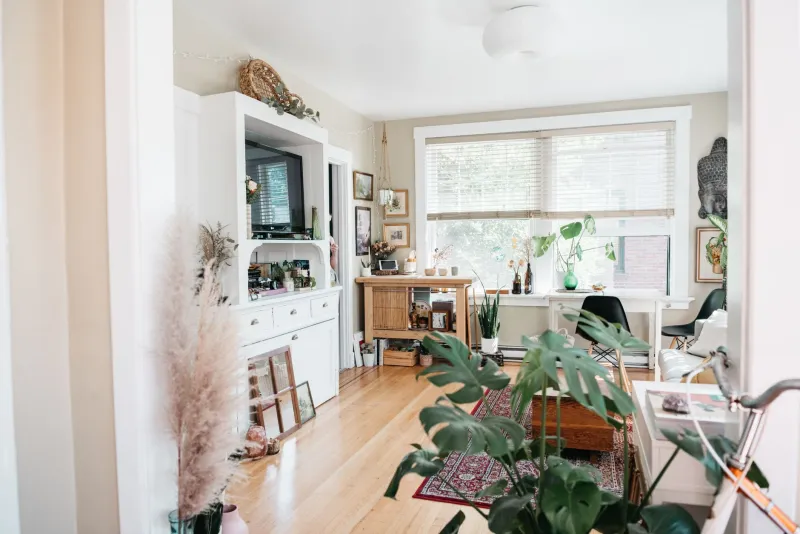
Walk into Marisol Vega's Brooklyn apartment and your eyes don't know where to land first. There's a chartreuse velvet couch pushed up against a gallery wall of mismatched vintage prints. A disco ball hangs in the kitchen. The bookshelves are stuffed — not organized, stuffed — with paperbacks, ceramic mushrooms, and a collection of neon-colored candles she swears she'll burn someday. It looks, by every conventional design standard, like a lot.
Marisol doesn't care. "I used to have a white apartment," she says, laughing. "I was miserable in it. Like, aesthetically miserable. I'd come home and feel nothing."
She's not alone. Across the US, a growing wave of renters and homeowners — many of them in their 20s and 30s — are torching the minimalist rulebook and replacing it with something louder, brighter, and a whole lot more personal. Interior designers have a name for it now: dopamine décor. And despite how chaotic it looks on the surface, the people living inside it say it's actually making them feel better.
The Great Beige Backlash
For at least a decade, minimalism ruled American interiors. Think clean lines, neutral palettes, the kind of living room that looks like it was staged for a real estate listing. It was aspirational, sure, but it was also, many people now admit, kind of exhausting to maintain — and weirdly emotionally flat.
The shift started quietly, accelerated by pandemic life. When your apartment becomes your office, your gym, your social life, and your only escape all at once, a stark white room stops feeling serene and starts feeling like a waiting room. People needed something from their spaces. Comfort. Personality. A reason to actually enjoy being inside.
"What we saw during and after COVID was a massive re-evaluation of what home means," says interior designer Priya Okonkwo, who is based in Chicago and has watched her client requests evolve dramatically over the past few years. "People stopped asking me for 'clean' and started asking for 'cozy,' 'fun,' 'me.' They wanted their homes to feel like them — loud and specific and real."
The result? Living spaces that look like a collaboration between a thrift store, a botanical garden, and a very enthusiastic child with a paint set. And honestly? They're kind of wonderful.
What Dopamine Has to Do With Your Throw Pillows
The term "dopamine décor" sounds like marketing language, but there's actual neuroscience lurking underneath it. Dopamine, the neurotransmitter most associated with reward and motivation, gets triggered by novelty, visual interest, and sensory stimulation. When your environment is full of color, texture, and unexpected details, your brain keeps finding new things to latch onto — and that process of discovery, however small, produces a low-level but consistent mood lift.
"Color, in particular, has a well-documented effect on emotional state," explains Dr. Tamara Shields, a licensed therapist in Austin who incorporates environmental psychology into her practice. "Saturated, warm colors tend to increase energy and feelings of warmth. Cooler, richer tones can feel grounding. When someone surrounds themselves with colors they genuinely love, they're essentially building an environment that reinforces positive emotional cues every time they walk into it."
The key phrase there is colors they genuinely love. Dopamine décor isn't about following a trend or copying a Pinterest board. It's about building a space that feels personally meaningful — which turns out to be the actual mechanism behind the mood boost.
"It's not the maximalism itself that helps," Dr. Shields is careful to clarify. "It's the sense of agency and self-expression. When your home reflects who you are, you feel seen — even when you're alone. That's incredibly powerful for mental health."
The Instagram Problem (and Why It Might Not Be One)
Critics of the dopamine décor trend — and there are some — tend to argue that it's less about genuine self-expression and more about curating a shareable aesthetic. And look, they're not entirely wrong. A quick scroll through #maximalistdecor or #dopaminedecor on any platform will show you plenty of spaces that feel more like sets than homes. Every object perfectly placed. Every color intentional. The chaos is, in many cases, extremely organized chaos.
But even Priya Okonkwo, who acknowledges the Instagram effect is real, thinks the criticism misses something. "Even if someone discovers this aesthetic online and recreates it, they're still making choices. They're still picking the colors that speak to them, the objects that feel like theirs. The inspiration might come from a feed, but the execution is personal."
And for plenty of people, it genuinely isn't about the 'gram at all. Marcus Tillman, a 28-year-old teacher in Atlanta, has been slowly transforming his apartment for two years — and he's never posted a single photo of it. "It's just for me," he says simply. His place features a deep teal accent wall, a collection of vintage sports pennants, plants absolutely everywhere, and a rug he describes as "aggressively orange." "I walk in and I feel happy. That's the whole point."
What Designers Actually Recommend
If you're thinking about leaning into this whole colorful chaos thing, designers suggest starting with intention rather than impulse. The maximalist spaces that work best aren't random — they have an internal logic, even if it's not immediately obvious to a visitor.
"Start with one color you love and build outward from there," Priya advises. "Let that color show up in different ways — a wall, a textile, a piece of art — and then layer in complementary tones. The goal is richness, not randomness."
Dr. Shields adds a practical mental health tip: make sure at least one area of your home stays relatively calm. "Even people who thrive in stimulating environments need a place to decompress. A bedroom with slightly softer tones, a reading corner that's less visually busy — it gives your nervous system a break without abandoning the aesthetic you love."
The other thing both experts agree on? Personalization beats trends every single time. A maximalist apartment filled with things you actually love will always feel better than one filled with things that were cool on social media six months ago.
Living Loud, Feeling Good
There's something quietly radical about the dopamine décor movement, underneath all the saturated color and the gallery walls. It's a rejection of the idea that grown-up spaces are supposed to be restrained. That maturity means neutrals and clean lines and nothing too much.
Marisol Vega puts it pretty well, standing in her gloriously chaotic Brooklyn apartment, the disco ball catching the afternoon light and throwing little diamonds across every surface. "My mom thinks it's a lot," she says. "But I wake up every morning and I'm genuinely happy to be in my home. When did that become a weird thing to want?"
Honestly? It shouldn't be weird at all. Your home is the one place you actually get to control. If filling it with color, texture, and the things that make you feel like yourself is the move — then the move is looking pretty good right now.