Life on Shuffle: How Gen Z Is Curating Every Waking Moment Like a Personal Playlist
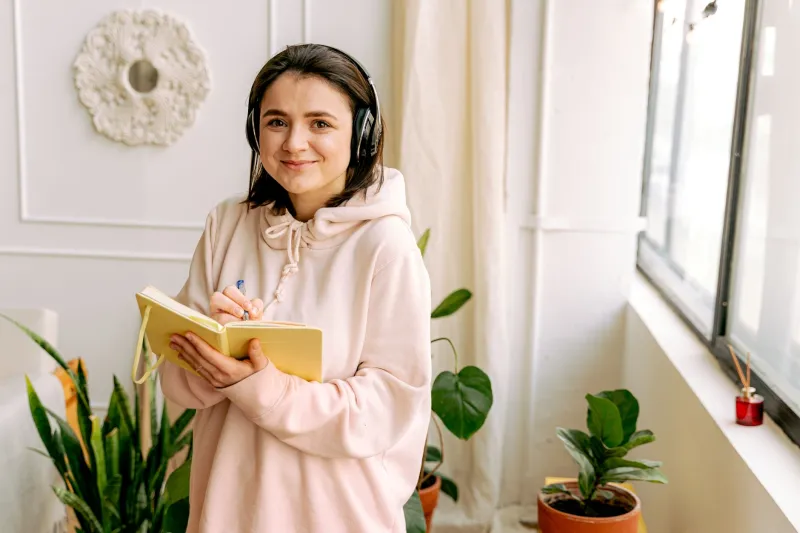
There's a moment that happens a lot these days — someone in their mid-twenties opens their notes app before a hangout with friends, not to check directions, but to review a list. Maybe it says something like: low-energy, golden hour vibes, no loud bars, something tactile. It reads less like a plan and more like a mood board. And honestly? That's kind of the point.
Welcome to the era of the dopamine menu — a very Gen Z approach to living where real-world experiences get the same careful curation treatment as a perfectly sequenced playlist. Workouts, morning routines, creative sessions, social outings — all of it is being filtered through a lens of intentionality that previous generations mostly reserved for, well, actually making art.
What Even Is a Dopamine Menu?
The term started picking up steam on TikTok a couple years back, originally framed as a mental health tool — a list of activities that genuinely bring you joy, organized by effort level so you can reach for the right one depending on how you're feeling. Low battery? Cozy tea and a comfort show. Buzzing with nervous energy? A fast-paced solo walk with a hyperpop playlist blasting.
But it's evolved way beyond a wellness hack. Now it's practically a lifestyle philosophy. People aren't just listing activities — they're sequencing them. They're thinking about how a Thursday afternoon gym session should feel different from a Saturday morning one, and building their Spotify queue, their outfit, their pre-workout snack, and even their lighting accordingly. The whole thing gets stacked, layered, matched.
Call it experience stacking. And it's everywhere.
The Playlist Brain Takes Over Real Life
Here's the thing about growing up with streaming: you learn early that context matters. The same song hits completely differently at 2 a.m. than it does during a morning commute. Algorithms trained a whole generation to think about sequencing — what comes before, what comes after, how the emotional arc of a listening session builds and releases.
That logic has now bled into how a lot of young people structure their days. A Sunday reset isn't just "cleaning your room" anymore — it's a curated sequence that might start with a specific lo-fi playlist, move through a skincare routine timed to a comfort podcast, transition into a decluttering session set to something upbeat, and close with journaling under warm lamp light. Each piece chosen to carry a specific emotional register. Each transition deliberate.
Some people even assign color themes. Soft yellows for creative mornings. Deep greens for grounding, outdoor activities. Muted terracottas for slow, social evenings. It sounds a little extra, sure — but it's also weirdly effective at making ordinary moments feel more vivid and intentional.
Living Loud and in Full Color — But For Who?
Here's where it gets complicated. There's a genuinely beautiful idea at the core of all this: the notion that your everyday life deserves the same care and creativity you'd pour into something you'd share with the world. That a Tuesday afternoon can have texture. That you're allowed to be the director of your own experience.
But there's a shadow side too, and it's hard to ignore. When you've been raised on platforms that reward aesthetic coherence and shareable moments, the line between curating your life for yourself and producing your life for an audience gets blurry fast. Are you building a dopamine menu because it genuinely helps you feel more alive? Or because the idea of a well-curated life has become its own kind of performance — one that doesn't need an actual audience to feel like it's being watched?
Burnout researchers have started flagging something they call optimization fatigue — that specific exhaustion that comes from treating every corner of your existence like a project to be refined. When rest has to be the right kind of rest, and your leisure activities need to hit the correct emotional notes, the whole thing starts to feel like a second job. The playlist stops feeling like freedom and starts feeling like pressure.
The Authenticity Question Nobody Wants to Answer
There's a generational tension buried in all of this. Older millennials and Gen X folks tend to raise an eyebrow at the idea of planning spontaneity — of engineering serendipity through a mood-matched experience stack. To them, life's best moments are the ones that catch you off guard, unplanned and un-curated.
But Gen Z largely grew up in a world where everything was already designed to manipulate their attention and emotional state — every app, every feed, every recommendation engine. Against that backdrop, deliberately curating your own experience isn't pretentious. It's almost a form of resistance. It's saying: I'll decide what my life feels like, thanks.
And honestly, that reframe lands. There's something genuinely empowering about a twenty-two-year-old who knows exactly what kind of environment helps them focus, what social settings restore versus drain them, and what sensory inputs shift their mood in the direction they want to go. That's self-knowledge. That's not performing life — that's actually paying attention to it.
The Sweet Spot Between Curation and Chaos
The people who seem to do this best — the ones who've built genuinely rich, textured lives rather than aesthetically coherent content reels — tend to hold their menus loosely. They've got the framework, but they're not precious about it. They'll swap out a planned solo walk for an unexpected phone call with a friend. They'll let a "productive afternoon" turn into a two-hour rabbit hole about something they didn't know they were curious about.
The playlist is a starting point, not a script.
Maybe that's the real lesson hiding inside all this experience-stacking culture: the goal was never to control how life feels at every moment. It's to show up to your own life with enough awareness to actually be in it — to feel it fully, loudly, in whatever color it happens to be today.
Even if that color is a little chaotic and doesn't match anything else in the queue.