Feeling It? There's a Folder for That: How People Are Architecting Their Entertainment Around Their Emotions
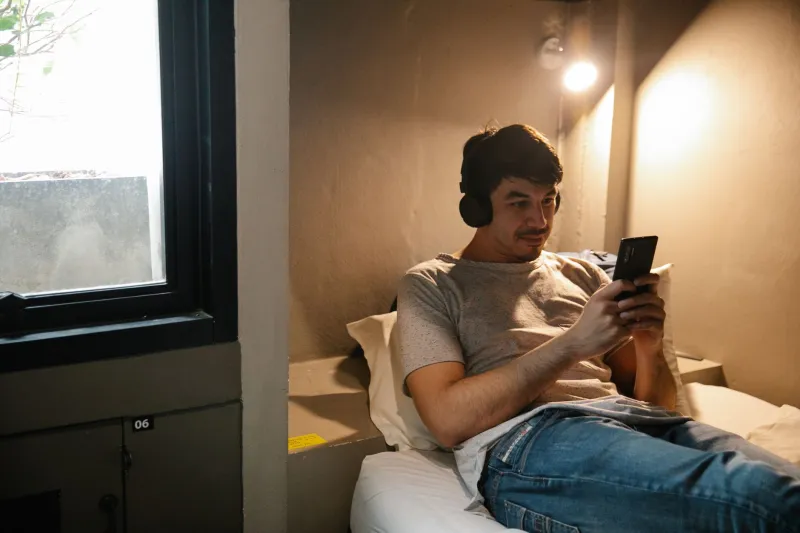
Kayla, 28, a graphic designer in Austin, has a Spotify playlist called "grey sky brain." Another one titled "serotonin loading..." A third that just says "main character, obviously." She's got a YouTube watch-later queue sorted by vibe, a Notes app folder of TikTok links organized by the feeling they're supposed to fix, and a Letterboxd list called "cry it out" that she's been building since 2021.
"I don't think of it as being extra," she says. "It's just — I know what I need when I need it. I don't want to waste time hunting for it."
Kayla isn't alone. Across the country, people are quietly building what some are calling a dopamine menu — a sprawling, self-curated library of content organized not by genre or format, but by emotional state. And the behavior is spreading fast.
The Playlist That Knows You Better Than the App Does
Streaming platforms have spent billions trying to predict what you want to watch or hear next. But more and more users are deciding they'd rather do it themselves — and do it better.
The logic is simple: algorithms optimize for engagement. You don't always want engagement. Sometimes you want to cry. Sometimes you want background noise that feels like a hug. Sometimes you need something that'll pull you out of your own head in under four minutes. No recommendation engine has figured out how to read that in real time — but you have.
Dr. Priya Mehta, a clinical psychologist based in Chicago who works with young adults, calls this behavior "affective scaffolding" — building external structures to support your internal emotional world.
"What people are doing is essentially creating a toolkit," she explains. "They're anticipating future emotional states and pre-loading the resources they'll need. That's a pretty sophisticated form of self-regulation, even if it looks like someone just making a playlist."
She's careful not to frame it as a replacement for actual coping skills, but she does see it as a meaningful and largely healthy adaptation. "The world is genuinely overwhelming right now. Finding ways to give yourself comfort and control — even in small, low-stakes ways — matters."
It's Not Just Music Anymore
What makes the current version of this behavior different from, say, making a mixtape in 2003 is the sheer scope of it. People aren't just curating one playlist. They're building interconnected emotional libraries across every platform they touch.
There are Reddit threads dedicated to sharing "comfort content" lists. TikTok creators post their full "sad day" queues like they're sharing recipes. Discord servers where members swap Spotify links sorted by mood with the same energy other people share restaurant recommendations.
Marcus, 34, a teacher in Atlanta, keeps a Google Doc he calls his "reset menu." It has sections: need to laugh, need to feel less alone, need to feel inspired, need to feel literally nothing for a while. Each section has YouTube channels, podcast episodes, specific album runs, and at least one movie.
"I built it during a rough patch a couple years ago," he says. "I realized I kept wasting the first twenty minutes of trying to decompress just scrolling and not finding anything. The doc fixed that. Now I just go straight to it."
The efficiency element matters here. This isn't passive consumption — it's intentional consumption. People are treating their entertainment choices the way they might treat meal prep: do the decision-making in advance so you're not standing in front of the fridge at 10pm, exhausted and overwhelmed.
Content Creators Are Building for It
The creators who've picked up on this shift are already adapting their output accordingly.
Jordana, a lifestyle creator with a following across YouTube and Instagram, has started explicitly labeling her content by emotional function. Her "Sunday Reset" series is designed for a specific mood — slow, low-stimulation, meant to ease the anxiety of the week ahead. Her "hype up" Reels are a completely different energy, built for getting out of a funk fast.
"I started getting DMs where people were like, 'I save your videos for when I'm anxious' or 'I watch this one every time I need to feel motivated,'" she says. "That told me people weren't just watching casually — they were filing me away for specific moments. So I started being more intentional about creating for that."
She's noticed that videos she explicitly labels by emotional purpose perform better in saves and shares, even if they don't always spike in immediate views. "People are building their menus. They want to know where to put you."
The Dark Side of the Comfort Catalog
It's worth asking, though — is there a point where a perfectly curated emotional toolkit stops being self-care and starts being avoidance?
Dr. Mehta thinks the line is worth watching. "If someone is using their comfort content to actually process an emotion — to let themselves feel sad, to release some tension, to genuinely recharge — that's healthy. If they're using it to never sit with discomfort at all, that's a different thing."
The goal of a dopamine menu, ideally, isn't to manufacture a feeling on demand every time reality feels hard. It's to have somewhere to land. There's a meaningful difference between those two things, even if the playlist looks identical from the outside.
Marcus puts it plainly: "My reset menu isn't about escaping. It's about getting back to myself faster so I can actually deal with stuff. It's a shortcut, not a hiding spot."
What This Actually Says About Us Right Now
The rise of mood-based content curation is, at its core, a story about agency. In a media landscape that's constantly trying to predict, nudge, and monetize your attention, building your own emotional library is a quiet act of reclaiming control.
It's also a sign that audiences are getting more emotionally literate about their own consumption habits. Knowing that you need something slow and warm on a hard Tuesday night — and having that thing ready — requires a level of self-awareness that's genuinely worth something.
Kayla, back in Austin, puts it this way: "I know it sounds like a lot, but honestly? Having everything sorted means I spend less time on my phone overall. I go in, get what I need, get out. It's the opposite of doom-scrolling."
Her "grey sky brain" playlist is currently 47 songs long. She added three more last week.
Somehow, that feels exactly right.